Why Most Cooling Tower Teams Fall Behind by Mid-January (And How to Fix It for Good)
By mid-January, most businesses are already drifting.
Not because people are lazy.
Not because your team “doesn’t care.”
And not because you didn’t set goals.
Cooling tower service companies fall behind for a simpler reason:
The operation is running on memory, urgency, and heroics.
That works when volume is low. It fails the moment the schedule fills up, weather shifts, or one key person is out.
The Pattern Nobody Wants to Admit in January
January has a way of exposing what the business is actually built on.
When things are calm, your operation can “feel” organized.
When things are busy, reality shows up:
- Preventive maintenance gets pushed because something urgent broke
- Reports get done late because they’re built from scratch every time
- Compliance becomes stressful because missing details surface too late
- Follow-ups and renewals don’t fail loudly… they just disappear
If you’ve ever said, “We’ll catch up next week,” you already know the pattern.
The question isn’t: “How do we try harder?”
The question is: “What system makes the right work happen even when we’re slammed?”
What Actually Breaks Down in a Cooling Tower Operation
PM schedules drift
PM isn’t hard because people don’t believe in it.
PM is hard because it competes with breakdowns, access issues, reschedules, and last-minute client requests.
When the schedule is managed in too many places (texts, paper notes, whiteboards, someone’s head), drift becomes inevitable.
Service reports lag or vary by tech
Clients don’t just want service. They want certainty.
If reports are inconsistent, delayed, or missing photos/readings, you create a credibility gap:
- You did the work, but the documentation doesn’t prove it
- You caught issues, but the follow-up process isn’t clear
- You made recommendations, but nothing triggers the next step
Compliance becomes a scramble
Even strong teams get squeezed by compliance when the data isn’t captured cleanly at the point of work.
The scramble usually happens because:
- readings are missing
- photos weren’t taken
- forms weren’t completed consistently
- someone is chasing details after the visit is already over
Follow-ups and renewals slip quietly
This is one of the most expensive leaks in the business.
Quotes go out and nobody follows up.
Recommendations get approved verbally and never get scheduled.
Annual renewals sit until the client calls someone else.
Not because you’re bad at service.
Because follow-up is treated like a separate job that only happens when someone remembers.
The Momentum System (A Simple Framework That Scales)
A scalable cooling tower operation doesn’t rely on perfect people.
It relies on a repeatable system that reduces friction and closes loops.
Here’s a framework you can use immediately:
1) Capture (make the work real)
If it didn’t get captured, it didn’t happen.
Capture should be easy and structured:
- readings, notes, and photos in the same flow
- consistent fields so data isn’t “freeform chaos”
- timestamps and site context so everything is traceable
The goal is simple: stop letting critical details live in someone’s head.
2) Structure (make it repeatable)
Structure turns a good technician into a consistent operation.
This is where checklists, templates, and standard steps matter:
- PM checklists that match your service standards
- service report templates that don’t change every time
- standardized “recommendation categories” so follow-up is trackable
Structure isn’t bureaucracy.
Structure is what makes quality predictable.
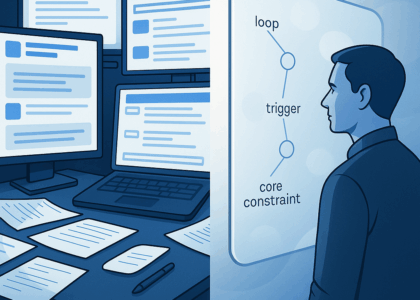
3) Close the loop (make it self-correcting)
This is the missing piece in most service companies.
Closing the loop means:
- missing readings trigger a prompt before the job is closed
- recommendations trigger tasks, quotes, and follow-ups automatically
- recurring issues get flagged so patterns don’t repeat unnoticed
When loops close automatically, “falling behind” becomes much harder.
Where AI and Automation Actually Help (Without Overcomplicating Anything)
Most teams don’t need fancy AI.
They need AI applied to the bottlenecks that cause drift:
- Tech notes → client-ready service reports
The tech records the facts. The system produces a consistent report format. - Missing details → instant follow-up prompts
If a photo or a reading is missing, it gets caught while the tech is still on-site. - Recurring problems → pattern recognition
If the same basin issue, drift eliminator problem, or chemical imbalance repeats, it gets surfaced as a trend. - PM scheduling → fewer drops
Automate reminders, reschedules, and confirmations so PM doesn’t depend on memory. - Quotes and renewals → automatic follow-up sequences
Follow-ups should run even when the office is busy.
The point isn’t replacing your team.
The point is removing the “invisible work” that steals momentum.
What to Audit This Week (10 Minutes)
If you want fast clarity, do this:
Make two lists.
List A: What causes drift
Examples:
- “We chase readings after the visit”
- “Reports vary by technician”
- “Follow-ups depend on whoever remembers”
- “PM scheduling lives in too many places”
List B: What compounds
Examples:
- “Standard report format every time”
- “Job can’t close if required fields are missing”
- “Recommendations automatically become tasks + follow-ups”
- “PM schedule triggers reminders and confirmations”
Then pick one drift item and convert it into a compounding system.
That’s how you build momentum without relying on willpower.
The Goal Isn’t “More Tech.” It’s Fewer Drops
Cooling tower businesses don’t scale because they get more complicated.
They scale because execution becomes more reliable:
- fewer missed steps
- fewer late reports
- fewer compliance surprises
- fewer lost follow-ups
When reliability goes up, trust goes up.
When trust goes up, renewals and approvals get easier.
If you want a real example of what a professional cooling tower service company looks like, check out Pinnacle Cooling Tower Service.
Next Step
If you want help building a simple “Momentum System” for your cooling tower operation, start with one workflow:
- service reports
- PM checklists
- compliance documentation
- quote follow-ups
- renewals
Pick one. Tighten it. Automate the loop.
That’s how you stop falling behind every winter and start building a business that runs clean all year.
FAQs: Cooling Tower Service Operations, Reporting, and Automation
What causes cooling tower service teams to fall behind on PM and reporting?
Usually it’s workflow drift: schedules managed in too many places, inconsistent documentation, and follow-ups that depend on memory.
How can automation improve cooling tower service operations?
Automation helps by standardizing checklists and report templates, triggering reminders, and ensuring required fields are completed before a job is closed.
Can AI generate cooling tower service reports from technician notes?
Yes. AI can take structured notes, readings, and photos and produce a consistent client-ready report format, reducing admin time and improving consistency.
What’s the fastest workflow to automate first in a cooling tower business?
Service reporting and follow-ups are often the quickest wins because they reduce rework and prevent lost revenue from missed recommendations.
Does automation replace technicians or office staff?
No. The goal is to remove repetitive administrative work so your team can focus on service quality, responsiveness, and customer relationships.
About This Page
This article explains why cooling tower service companies often lose operational momentum early in the year, and outlines a practical “Momentum System” framework to keep preventive maintenance, service reporting, compliance, and follow-ups consistent as workload increases.
About the Author
Vlad Gutenmakher helps industrial service companies build practical AI and automation systems that reduce administrative drag and improve execution. His work focuses on field service workflows, reporting consistency, compliance visibility, and follow-up automation for businesses in water treatment, cooling tower service, and industrial HVAC.